The Best Organic Wheatgrass Powder Brands
Contents
- What About Growing Wheatgrass at Home?
- The Best Wheatgrass Powder Brands
- 1. Amazing Grass Wheat Grass Powder
- 2. Maju Wheatgrass Juice Powder
- 3. Pure Synergy Organic’s Wheatgrass Juice Powder
- 4. Micro Ingredients Organic Wheat Grass Powder
- 5. Terrasoul Superfoods Organic Wheatgrass Juice Powder
- What to Look for When Choosing the Best Wheatgrass Supplement
- Ways to Incorporate Wheatgrass Into Your Diet
- The Health Benefits of Wheatgrass
- Is Powder Better than Fresh?
- Is Wheatgrass Safe?
- Allergies and Side Effects?
- Our Top 3 Picks
- Sources
Wheatgrass looks wonderful. The color is bright green and for some of us, may inspire thoughts of beautiful spring days when everything is becoming green again and lazy summer picnics on a lush green lawn.
Yes, wheatgrass is, in fact, a type of grass and as the name suggests it’s the leafy young sprouts of the wheat plant.
Wheatgrass is harvested before the plant forms grain, so the grass itself shouldn’t contain gluten. Cross-contact with wheat seeds is possible, though, so people with celiac disease should only buy powders labeled gluten free. The flavor of wheatgrass can be described as slightly sweet but grassy with an earthy aftertaste reminiscent of green tea.
For a lot of people, while this may not stir up thoughts of a delicious drink, it’s not horrible either. If you can get past the flavor, it’s an easy way to add some greens to your day.
What About Growing Wheatgrass at Home?
You can grow wheatgrass at home, but there is a risk of it becoming moldy which is definitely not something you want to consume. It also takes constant care which if you are the type of person that can only keep cacti alive, is not your best option.
A powder is also more convenient than juicing fresh wheatgrass. We’ve selected some of the best wheatgrass powders to help you out here.
The Best Wheatgrass Powder Brands
1. Amazing Grass Wheat Grass Powder
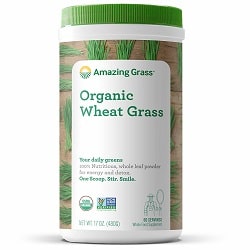
Our Verdict: Best for Convenience
The Amazing Grass Wheat Grass Powder is, according to the brand, equal to several shots of fresh wheatgrass per full scoop. It’s USDA certified organic, vegan, kosher, and free from sugar and gluten. It’s 100% pure and raw to preserve the nutrients.
Health claims for wheatgrass, such as better energy or dental health, are not backed by clinical studies. You can easily adjust the dose to suit your taste.
You can get approximately 60 servings if you use a full dose each time and you can even buy this wheat grass powder in sachets.
There is a California Proposition 65 warning on the label about lead. If that concerns you, choose a brand that publishes third-party heavy metal test results. It doesn’t dissolve so well and often remains chalky or slightly grainy.
Ingredients:
- Wheat Grass
Pros:
- USDA organic certified pure raw wheatgrass (gluten and sugar-free)
- Vegan and kosher.
- One scoop/serving is 8g of powder but it’s easy to adjust your dose.
- 60 servings per container.
- Also available in sachets.
Cons:
- There is a warning on the label about lead levels (California’s Proposition 65)
- Doesn’t dissolve so well
2. Maju Wheatgrass Juice Powder
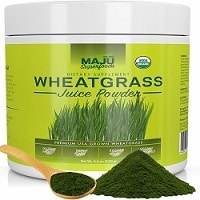
Our Verdict: Best Wheatgrass Juice Powder
Maju Wheatgrass Juice Powder easy to mix and doesn’t require the use of a blender. It’s USDA certified organic, vegan, kosher, and gluten and sugar-free. The wheatgrass is grown in the USA, and the brand says it is processed at low temperatures.
It’s created by juicing the wheatgrass and then letting it dry before grinding it into a fine powder has a mild and slightly sweet flavor. Claims that wheatgrass helps with weight loss or blood sugar have not been shown in human studies.
Although the serving sizes are small (2g/ one teaspoon), they are potent.You can take up to 2 tablespoons per day. There are around 78 servings per container. It comes with a free recipe ebook which helps with the flavor which some find too potent.
Ingredients:
- Wheatgrass Juice Powder
Pros:
- Pure USDA certified organic wheatgrass juice powder.
- Vegan and kosher.
- Recommended serving size is 2g or one teaspoon.
- Approximately 78 servings per container.
- Comes with a free recipe ebook.
Cons:
- Some may find the flavor too potent.
3. Pure Synergy Organic’s Wheatgrass Juice Powder

Our Verdict: Best Organic Wheatgrass Powder
Pure Synergy’s Organic Wheatgrass Juice Powder is USDA certified organic, vegan, kosher, and free from binders, fillers, gluten, and sugar. They test their product for heavy metals to make sure that it’s safe for consumption.
The wheatgrass is grown in the USA and cold-pressed and the resulting juice is then low temperature dried to preserve the nutrients. It mixes fairly well in water.
The recommended serving is 1.5 teaspoons (2.5g) which will give you 60 servings per bottle though there have been complaints that this number is exaggerated. This is a great option if you want to reduce your use of plastic as the bottle is glass.
Ingredients:
- Organic Wheat Grass Juice Powder
Pros:
- USDA certified pure organic powdered wheatgrass juice
- Vegan and kosher
- Tested for heavy metals
- Cold-pressed juice and low temperature dried
- Mixes fairly well and 1.5 teaspoons is a 2.5g serving (60 servings)
Cons:
- There may be fewer servings in the bottle than stated.
4. Micro Ingredients Organic Wheat Grass Powder
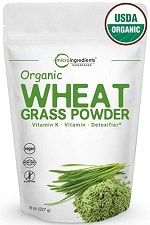
Our Verdict: Best Budget Buy
Micro Ingredients Organic Wheat Grass Powder is USDA certified organic, vegan, kosher, and free from binders, fillers, gluten, and sugar. It's grown in the USA and packed in an FdA approved facility. The flavor is remeniscent of matcha or green tea.
One scoop is the recommended serving of 3g and it works out to about 75 servings per bag but it’s easy to adjust your dose. The packaging isn’t ideal though. It’s hard get the powder out without a mess.
Ingredients:
- US Grown USDA Organic Wheat Grass Powder
Pros:
- Pure USDA certified organic wheatgrass powder
- Vegan and kosher.
- Packed in an FDA approved facility.
- One scoop is 3g.
- 75 servings per bag.
Cons:
- Getting the powder out of the ziplock bag is messy.
5. Terrasoul Superfoods Organic Wheatgrass Juice Powder
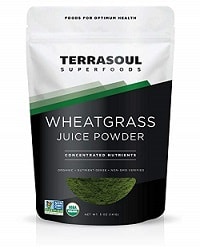
Our Verdict: Best Pack-Size Variety
The Terrasoul Superfoods Organic Wheatgrass Juice Powder is USDA certified organic, vegan, and free from binders, fillers, gluten, and sugar. It's also raw and non-irradiated to protect nutrients. It's grown in the USA and tested by a third party lab for heavy metals to ensure safety.
A recommended serving is 2 teaspoons (4g) and works out to roughly 35 servings if you have the 5 oz bag. It’s also available in 10 oz and 20 oz. But, it is a bit messy and it can be hard to get the last bit of powder out. It also doesn’t mix with water so well.
Ingredients:
- Organic Wheat Grass Juice Powder (Triticum Aestivum)
Pros:
- USDA certified organic wheatgrass juice powder (raw and non-irradiated)
- Vegan
- Tested by a third party lab for heavy metals
- One recommended serving is 2 teaspoons
- Available in 5 oz, 10 oz, and 20 oz
Cons:
- A little messy.
- Doesn't always mix very well with water.
What to Look for When Choosing the Best Wheatgrass Supplement

Pure wheatgrass products are best and whenever possible you should go organic. Going through wheatgrass powder reviews can help in that you will be able to see whether a product is of good quality or not.
We’ve done just that with the above products, but any time you want to try a different product, you should research it to make sure the brand is reputable.
Low-temperature drying preserves more of some antioxidants, so look for brands that describe how their powder is dried. If you prefer capsules, simple formulas are best. Common capsule additives like these are considered safe, but they add nothing nutritionally:
- Silica
- Gelatin
- Magnesium silicate
- Sodium benzoate
- Gelatin capsules (choose vegetable cellulose capsules if you are vegan)
Ways to Incorporate Wheatgrass Into Your Diet
Even if you dislike the flavor, there are ways to make it taste better. While you can add it to plain water, this may not be for everyone. Here are some healthy ideas to try:
- Drink a small shot of wheatgrass juice, you can then drink some fruit juice to get rid of the taste in your mouth.
- Add it to your fruit smoothie.
- Add it to a glass of juice.
- Add it to tea.
- Add it to your favorite plant milk.
- Bake with it, but try to keep the temperature low to better preserve the nutrients.
Pineapple, oranges and carrots generally go well with wheatgrass, and plant-based recipes come with environmental benefits too.
The Health Benefits of Wheatgrass
Nutrition Facts
Wheatgrass is full of nutrients. It is very low in calories, so it can’t replace a meal. A typical serving of a few grams adds small amounts of vitamins, minerals and antioxidants.
Keep the serving size in mind: a few grams of powder can’t replace a serving of vegetables.
Here’s a list of the nutrients:
- Vitamins: A, C, E, K and some B vitamins.
- Minerals: Iron, calcium, magnesium and selenium, among others.
- Amino acids: Wheatgrass contains amino acids, but a serving supplies very little protein.
- Chlorophyll: This is what makes green plants like spirulina green. Claims that chlorophyll boosts your blood’s oxygen are not supported by science.
Additional Benefits
Lab and animal studies suggest wheatgrass has antioxidant effects. Some people take it [with vegan probiotics](http://with vegan probiotics), but there is no evidence the combination does anything extra.
According to Memorial Sloan Kettering Cancer Center, human research is limited to small, preliminary studies:
- Ulcerative colitis: In a small trial of 23 patients, a month of daily wheatgrass juice reduced disease activity compared with a placebo. It hasn’t been confirmed in larger studies, and it is not a substitute for medical treatment.
- Chemotherapy side effects: A pilot study suggested wheatgrass juice may reduce blood-related side effects of chemotherapy in breast cancer patients. There is no evidence that it prevents or treats cancer. Always ask your oncologist before taking any supplement during treatment.
- Cholesterol and oxidative stress: Preliminary studies suggest possible benefits for blood lipids and markers of oxidative stress.
MSK notes that popular claims, such as wheatgrass detoxing the body, preventing tooth decay, lowering blood pressure or treating cancer, are not supported by clinical studies.
Is Powder Better than Fresh?
It all depends on what you prefer. Some people prefer the taste of fresh wheatgrass. Drying can reduce some heat-sensitive nutrients, but powder is far more convenient.
Is Wheatgrass Safe?
There is a concern with heavy metals that are absorbed from the ground. Some brands will send their product for tests to make sure. You should stick to those and do some research.
Contamination is also a concern. Wheatgrass is grown for 7 to 10 days in damp conditions, so mold and bacteria are possible. Reputable companies will take precautions but those brands that are not as diligent about their farming, storage, and processing practices may put products on the market that contain mold.
Allergies and Side Effects?
While wheatgrass is gluten-free, you should avoid it if you have a wheat allergy. Check the label for allergen warnings if you have other food allergies.
Nausea is the most common side effect, especially with larger doses. Be sure to start at a low dose and work your way up. Since these powders are so concentrated you can also just take half the dose in general if you prefer.
Wheatgrass is a low-calorie way to add a few extra nutrients, but it won’t cure or prevent disease. Stick to reputable brands that test for heavy metals.
Our Top 3 Picks
- For your pocket: Micro Ingredients Organic Wheat Grass Powder
- Best for different pack sizes: Terrasoul Superfoods Organic Wheatgrass Juice Powder
- Best wheatgrass juice powder: Maju Wheatgrass Juice Powder
Which brand do you think is the best? Let us know in the comment section below.
Sources
- Wheat grass, Memorial Sloan Kettering Cancer Center
- Wheat grass juice in the treatment of active distal ulcerative colitis: a randomized double-blind placebo-controlled trial, Scandinavian Journal of Gastroenterology (PubMed)