Best Green Tea Extract Supplements (EGCG Capsules, Pills & Powders)
Contents
- The 5 Best Green Tea Supplements
- 1. Zenwise Health Green Tea Extract w/ Vit C & EGCG
- 2. Natures’ Nutrition 1000 mg Green Tea Extract with EGCG
- 3. Now Green Tea Extract 400 mg
- 4. Life Extension Mega Green Tea Extract (98% Polyphenols) Decaffeinated
- 5. Bulksupplements Pure Green Tea Extract 50% EGCG Powder
- How to Choose the Best Green Tea Extract for You
- The Benefits of Green Tea
- Are There Side Effects?
- Our Top 3 Picks
- Sources
Many studies on green tea look at people drinking several cups a day.
And let’s be honest, the flavor is not thaaattt great. Of course there are people who do enjoy the flavor, but if you're like me, this is not the case.
Plus, multiple full cups don’t leave much room to drink anything else during the day.
That’s where an extract comes in.
A simple tablet or capsule, powder, or liquid extract that you can take with water or add to smoothies is much simpler than drinking multiple cups a day.
We’ve looked through numerous supplements that are available (which are all safe for vegans) to make choosing the best green tea supplement for you a little easier.
We’ll also look at the main compound, epigallocatechin gallate (EGCG), and at how to use these extracts safely.
Extracts are much more concentrated than tea, and high doses have been linked to liver injury.
The 5 Best Green Tea Supplements
1. Zenwise Health Green Tea Extract w/ Vit C & EGCG
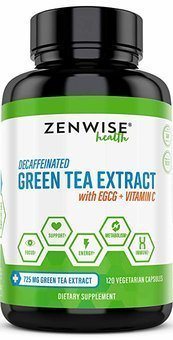
Our Verdict: Best Decaf Option
Ingredients:
- 725 mg Green Tea (Camellia Sinensis) Decaffeinated Extract (leaf)
- 98% Polyphenols by UV (710.5mg)
- 45% EGCG by HPLC (326.25 mg)
- 60 mg Vitamin C
- Vegetable Cellulose (Capsule), Microcrystalline Cellulose, Magnesium Stearate, Silicon Dioxide
Pros:
- Decaffeinated.
- Note: There is still a small amount of caffeine as caffeine is hard to remove completely, but it’s negligible.
- Contains 98% polyphenols, 45% EGCG.
- Contains vitamin C, which may help EGCG stay stable during digestion.
- The capsules are large but easy to swallow.
- Serving size is 1 capsule.
Cons:
- The large capsules may be too large for those who struggle to swallow capsules and pills in general.
- The dosage is quite high in one capsule (about 326 mg EGCG).
- Although it’s rare, some people may struggle with stomach pain and headaches.
2. Natures’ Nutrition 1000 mg Green Tea Extract with EGCG
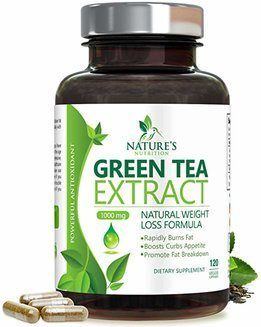
Our Verdict: Best Variety of Package Sizes
Ingredients:
- Green Tea 98% Extract (dried leaves)
- Vegetable Cellulose (Veggie Cap)
Pros:
- Very few ingredients, just the cellulose to make the capsule and dried tea leaves.
- Provides energy from the caffeine naturally found in green tea.
- Has a minimum of 45% EGCG and a minimum of 75% polyphenols catechins.
- Comes in multiple sizes of 60, 90, 120 capsules.
Cons:
- The serving size is two capsules but considering that equates to 1000 mg of green tea extract, one capsule works well as a lower and safer dose.
- Contains caffeine so it’s not a good product if you struggle with caffeine sensitivity.
- No vitamin C to improve absorption.
3. Now Green Tea Extract 400 mg
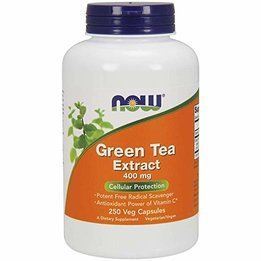
Our Verdict: Easiest to Swallow
Ingredients:
- 100% Green Tea Extract (Leaf) (up to 32 mg) (min. 40% Catechins) 400 mg
- Vitamin C (as Ascorbic Acid) 60 mg
- Cellulose (capsule) and Magnesium Stearate (vegetable source)
Pros:
- Now is a trusted brand.
- The capsules are small and easy to swallow.
- Contains vitamin C.
- Contains a minimum of 40% catechins.
- The caffeine (up to 32 mg) may improve alertness.
- Serving size is 1 capsule.
- Two different bottle sizes to choose from, 100 capsules or 250 capsules.
Cons:
- Contains caffeine.
- Can cause some people to feel jittery.
- If taken after lunchtime it can interfere with sleep.
If instead you were looking for just an EGCG supplement, Now also makes one of the best EGCG supplements. This product is packed with 200mg of EGCG per capsule.
4. Life Extension Mega Green Tea Extract (98% Polyphenols) Decaffeinated
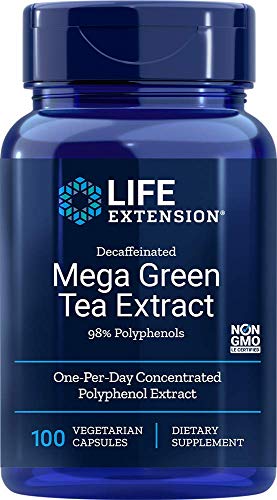
Our Verdict: Best All-Rounder
Ingredients:
- Green tea decaffeinated extract (leaf) [std. to 98% polyphenols, 45% EGCG] 725mg
- Vegetable Cellulose (capsule), Rice Flour, Stearic Acid, Silica
Pros:
- Life Extension is a trusted brand.
- Decaffeinated.
- 98% Polyphenols and 45% EGCG
- Comes in two different bottle sizes, 100 capsules or 180 capsules.
- Serving size is 1 capsule daily.
Cons:
- The capsules are a little bit bigger than some may prefer.
- May cause nausea in some people.
- No vitamin C.
Life Extension also has the version that still contains the caffeine if you prefer to take a caffeinated supplement. Pick up the caffeinated version here.
5. Bulksupplements Pure Green Tea Extract 50% EGCG Powder
Our Verdict: The Purest Green Tea Supplement
Ingredients:
- 100% Green tea leaf extract (powder)
Pros:
- The only ingredient is powdered green tea leaf extract.
- Non-GMO
- Can be used in smoothies, water, juice, or tea as well as an ingredient in DIY beauty products.
- Lasts long.
- Can adjust servings from 1/16th teaspoon to ¼ teaspoon. ¼ teaspoon is approximately 500 mg of extract (about 250 mg EGCG). Follow the label and don't exceed it.
- Comes in three pack sizes (3.5 oz/ 100 g, 2.2 lb/ 1 kg, 11 lb/ 5 kg)
Cons:
- Tastes bitter and can cause that feeling of mouth puckering if you use a full ¼ teaspoon serving.
- It can take a while to dissolve.
- Can be messy.
How to Choose the Best Green Tea Extract for You
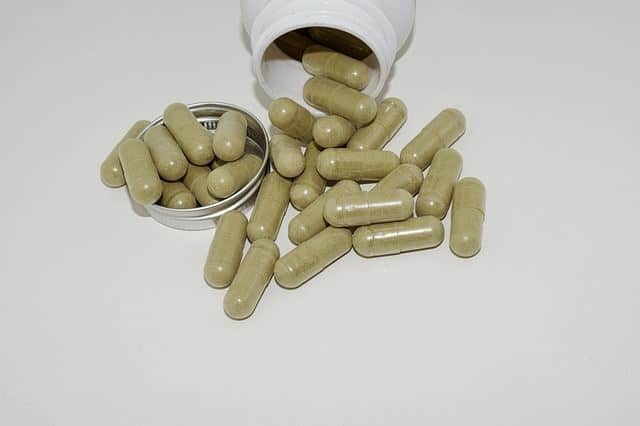
When it comes to any supplement, you need to check the ingredients used. Period.
Capsules and soft gel capsules are often preferable because tablets use binders and fillers - some of which you don’t want to put in your body.
Having said that, even capsules can contain ingredients that do more harm than good or that interfere with various dietary restrictions.
Check the ingredients list for:
- Gelatin
- Lactose
- Sucrose (if you can’t have sugar)
- Glucose (if you can’t have sugar)
- Artificial colors (FD&C)
- Magnesium silicate/ talc
- Sodium benzoate
- Titanium dioxide
- Parabens
Liquid extracts are great to add to water, tea, juice, or smoothies; but some contain alcohol, so if you want to stay away from alcohol, double check the ingredients.
The bottles are usually small and don’t last long either.
The Benefits of Green Tea
Green tea comes from the same plant (Camellia Sinensis) as black tea, white tea, and oolong tea but unlike these other teas, the leaves that make up green tea are not oxidized (fermented).
While the other teas in the Camelia Sinensis family also have health benefits, green tea's minimal processing helps it keep more catechin antioxidants.
Much like wheatgrass, it also offers other compounds, such as L-theanine (amino acid), vitamin C, a few B-vitamins, and some minerals including calcium.
Research is ongoing, and studies have looked at green tea for:
Anti-Tumor and Anti-Cancer Benefits
Many studies have looked at green tea and cancer. According to the NIH's NCCIH, the overall results have been inconsistent, so green tea can't be recommended to prevent or treat cancer.
Weight Loss and Sports Performance
Green tea should not be thought of as a miracle supplement as by itself, neither drinking green tea or a green tea extract alone is going to help you get into shape; the same way even some friendly supplements such as the vegan B12 could not.
Lifestyle factors and genetics play a huge role here and not everyone responds the same way to supplementation or drinking the tea regularly.
At best, the catechins and caffeine in green tea may have a modest effect on body weight. Diet and activity matter far more, as does good digestion, which some people support with the help of probiotics.
Some research has looked at whether green tea can improve endurance, with mixed results. A plant-based diet may also suit a healthy environment, but it won't change these findings. If you are weighing tea against coffee, know the facts about both drinks.
Green Tea for Heart Disease
Heart disease risk rises with obesity, high cholesterol, and a sedentary lifestyle. Green tea has been shown to lower total and LDL cholesterol to a small extent, but it did not affect HDL cholesterol or triglycerides.
Improvement in Cognitive and Psychological Health
Some small studies suggest green tea may help lower stress and improve alertness.
Researchers think the combination of caffeine and the amino acid L-theanine may be responsible. Note that many decaf extracts contain little caffeine.
Liver Health
Green tea is often marketed for liver health, but there is no good evidence that extracts protect the liver. In fact, concentrated extracts are the main concern for liver injury (see below).
Are There Side Effects?
Green tea extracts can cause harm when used incorrectly. Always stick to the dosage recommended on the supplement.
If you are pregnant or breastfeeding, talk to your doctor first, since most extracts contain caffeine. Also ask your doctor if you take medicine: green tea can lower levels of some drugs, such as nadolol and atorvastatin.
Nausea, headaches, and in those who are sensitive to caffeine, jitters, anxiety, and poor quality or quantity sleep has been reported. As with most things, moderation is the best way to approach your health. There are a few more side effects to be aware of though:
Liver Problems at High Doses
Brewed green tea is considered safe. Concentrated extract pills and powders, however, have been linked to liver damage. It is uncommon, but it can be serious.
The European Food Safety Authority found that 800 mg or more of EGCG a day from supplements may pose health concerns for the liver. Keep your total EGCG well below that, and stop and see a doctor if you notice dark urine, yellow skin or eyes, or belly pain.
Iron Absorption
Green tea is one of the teas that prevent some of the iron from your food from being absorbed by your body, so taking the supplement form close to mealtimes or with food can become problematic, particularly if you are already anemic.
Still, take your extract with food rather than on an empty stomach, which can help prevent nausea. If you are low in iron, take it a couple of hours apart from iron-rich meals or iron supplements.
Our Top 3 Picks
The best green tea extract brand depends on what works with your body, but here are the top three choices depending on what you are looking for:
- Purest green tea extract: Bulksupplements Pure Green Tea Extract 50% EGCG Powder.
- Best green tea capsules: Now Green Tea Extract 400 mg
- Best decaf option: Zenwise Health Green Tea Extract with Vit C and EGCG
Please let us know which one you think is the best green tea extract.
Do you prefer drinking cup after cup of this potent beverage or will you supplement it instead?
Sources
- Green Tea: Usefulness and Safety, National Center for Complementary and Integrative Health (NIH)
- EFSA assesses safety of green tea catechins, European Food Safety Authority