The Best Vegan D3 And Why Vitamin D Is So Important
Contents
- Best Vegan Vitamin D3 Supplements
- 1. Real Dose Essentials Vegan Vitamin D3
- 2. Mary Ruth's Vegan Plant-Based Vitamin D3 + K2
- 3. MRM Vegan Vitamin D3
- 4. Do Vitamins DailyD Vegan Vitamin D3
- 5. Doctor's Best Vegan D3
- Choosing a Vitamin D Supplement
- Vitamin D2 vs Vitamin D3
- What is Vitashine?
- Vitamin D Dosage
- Why a Vitamin D Supplement Instead of the Sun?
- Symptoms of Vitamin D Deficiency
- About Calcium
- Our Top Picks for the Best Vegan Vitamin D
- Sources
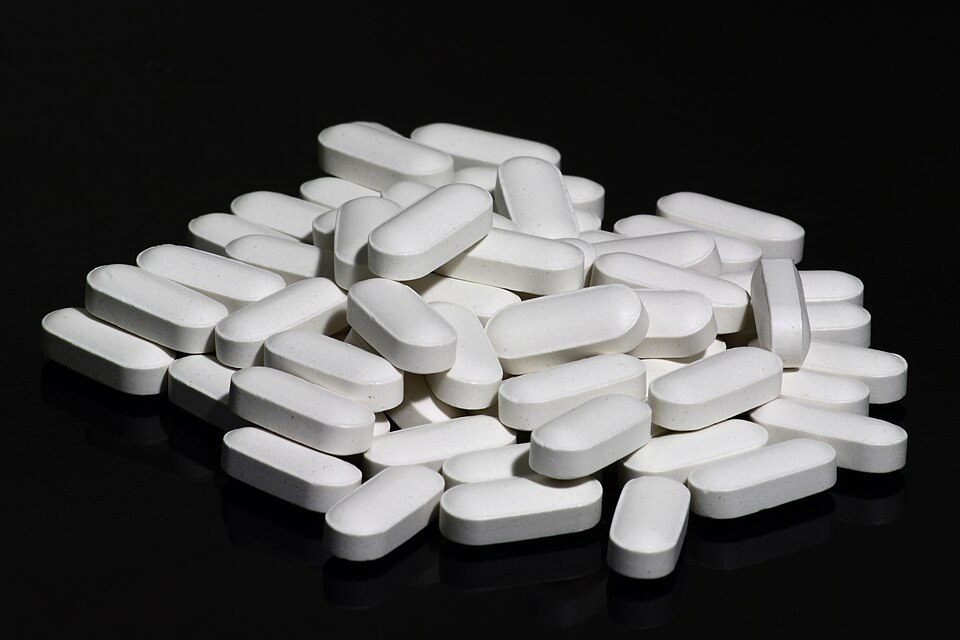
Photo by Ragesoss, CC BY-SA 4.0, via Wikimedia Commons
Vitamin D helps your body absorb and keep calcium and phosphorus, which you need for strong bones. Researchers are also studying its roles in immunity and other body systems.
Your skin makes vitamin D in sunlight, but UV rays also cause skin cancer, so sunburn and tanning beds are never a good trade. For most people, a supplement is the easiest way to get enough.
Vegans have few dietary sources of vitamin D besides fortified foods and UV-exposed mushrooms, and people who follow a vegan diet are at higher risk of deficiency. In winter, many people can't make enough from the sun either, so a supplement makes sense.
We'll explain all of this shortly, but first, here is a list of the best vegan D3 supplements.
Best Vegan Vitamin D3 Supplements
1. Real Dose Essentials Vegan Vitamin D3
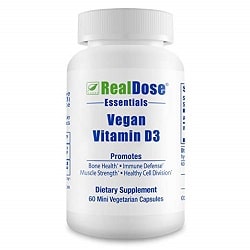
Our Verdict: Best Low Dose Vitamin D3
This D3 supplement by Real Dose Essentials contains 1000 IU of vitamin D3 derived from lichen. It has very few ingredients, other than the D3 it only contains rice flour and hypromellose. With so few ingredients, it's a good option if you have a sensitive stomach.
The capsules are small and easy to swallow. Though it's very rare, there are people whose tummies may not agree with this supplement.
Ingredients:
- Vitamin D3 1,000 IU (As Vitashine vegan cholecaliferol)
Pros:
- Non-GMO, gluten, nut, wheat, and soy-free
- Tested for purity
- Easy to swallow
- 60 servings of 1000 IU
Cons:
- In very rare cases, it can cause stomach upset or gas
2. Mary Ruth's Vegan Plant-Based Vitamin D3 + K2

Our Verdict: Best for Bariatric Surgery Patients
Mary Ruth's makes many quality supplements for vegan. This D3 (from lichen) spray adds vitamin K2, which helps activate proteins involved in bone building. Claims that K2 keeps calcium out of arteries are still being studied.
Vitamin K2 is made by bacteria, so it is found in fermented foods and some animal foods; this K2 is sourced from natto (fermented soy). None of the soy is left, however, making this supplement soy-free.
If you don't like pills, the fact that this is a spray is great. It also has a dropper. It tastes very mild and almost like olive oil which isn't great but not too bad. It's also a bit oily as it contains olive oil and coconut oil which may put some people off.
Ingredients:
- Vitamin D3 (as Lichen)
- Vitamin K2 (MK-7)
- Organic Medium Chain Triglycerides (from coconut oil)
- Organic Olive Oil
Pros:
- 1000 IU of D3 and 100 mcg of K2 (MK-7 form)
- Free from binders and fillers
- Non-GMO and free from gluten, wheat, corn, and soy
- Safe for those who have celiac's or have undergone bariatric surgery
- Liquid, it can be sprayed or added to water or juice
Cons:
- Can be a bit pricey (only 30 servings)
- Doesn't taste very nice but the flavor is mild
- Has an oily consistency
3. MRM Vegan Vitamin D3
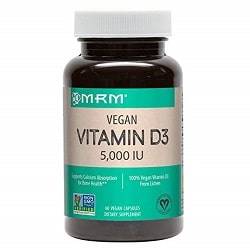
Our Verdict: Best High Dose D3 Supplement
MRM Vegan Vitamin D3 provides 5000 IU of D3 derived from lichen. That is above the 4,000 IU daily upper limit for adults, so only take this dose daily if your doctor has diagnosed a deficiency and is monitoring you. The capsules are small and easy to swallow, and it's non-GMO and free from many common allergens.
It contains binders and fillers, including small amounts of sucrose (sugar) and maltodextrin. The amounts per capsule are tiny, but check with your doctor if you strictly avoid them.
Ingredients:
- Vegan Vitamin D3 (As cholecaliferol)
Pros:
- 5000 IU may suit people treating a diagnosed deficiency under medical supervision
- Free from animal products and nuts, soy, wheat, gluten, and yeast
- Non-GMO
- 60 servings
Cons:
- Above the 4,000 IU daily upper limit for adults
- Contains small amounts of sugar and maltodextrin, plus fillers
4. Do Vitamins DailyD Vegan Vitamin D3
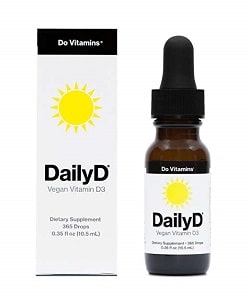
Our Verdict: Best Budget Buy
This little bottle provides you with your vitamin D supply for an entire year. Just one drop is 2500 IU of vitamin D and there is a serving for every day. It's certified clean and non-GMO. The only other ingredients are coconut and sunflower oil.
It doesn't taste like much and every time you buy a bottle, they donate one to children in need as they are part of the Vitamin Angels initiative.
The one downside with this supplement is that the dropper doesn't work so well. It's hard to get just one drop, especially when the bottle is full. So don't squeeze the dropper too hard and keep it away from your children.
Tip: Storing it in the fridge can make it a little thicker making it easier to control how much comes out of the dropper.
Ingredients:
- Vitamin D3 (Cholecalciferol)
- Medium chain triglycerides (from coconut oil)
- D-alpha tocopherol (from sunflower)
Pros:
- Non-GMO and free from animal products as well as gluten, wheat, sugar, and soy
- Third-party tested by LabDoor
- Manufactured according to GMP (Good Manufacturing Process) guidelines
- Small glass bottle, easy to travel with
- 365 servings (one drop provides 2500 IU)
Cons:
- Controlling the number of drops that come out of the dropper is difficult
5. Doctor's Best Vegan D3
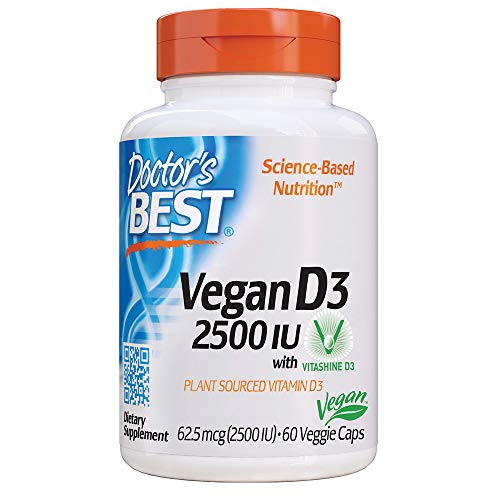
Our Verdict: Best Budget Buy Capsules at a Higher Dose
Doctor's Best formulates all their supplements based on scientific research. Their vitamin D3 supplement gives you 2500 IU of vitamin D3 and is GMP certified and third-party lab tested. The capsules are small and easy to swallow.
The newer formulations are free from gluten and soy.
They do contain small amounts of maltodextrin and sucrose (sugar), plus other additives like silicon dioxide.
Ingredients:
- Vitashine Vitamin D3 (as cholecalciferol) 2500 IU
- Microcrystalline cellulose
- Modified cellulose (vegetarian capsule)
- Maltodextrin
- Starch
- Sucrose
- Silicon dioxide
- D-alpha tocopherol
- Ascorbyl palmitate
Pros:
- Non-GMO and free from gluten and soy
- GMP certified
- Third-party lab tested
- Easy to swallow
- 60 servings
Cons:
- Contains small amounts of sugar and maltodextrin
- Contains a few additives
Choosing a Vitamin D Supplement
Aside from looking out for the usual additives like gelatin, lactose, sugar, colorants and magnesium stearate (not all forms of magnesium stearate are plant-based), there is one other big thing to look out for:
The form of vitamin D.
Vitamin D2 vs Vitamin D3
Vitamin D2 (ergocalciferol) is made by plants and fungi, and vitamin D3 (cholecalciferol) by animals, including humans. Mushrooms exposed to UV light contain vitamin D2.
The two forms are not equal, just like how we explained in another article; the omega-3 fatty acids ALA, DHA, and EPA are different.
Here is where they differ:
Vitamin D3 tends to raise blood levels of vitamin D more than D2. It is also the form your skin makes in sunlight. (For help with digestion itself, see our guide to digestive enzymes.)
Vitamin D2 still works, but in a randomized trial of 279 adults, D3 raised vitamin D levels more, and the difference depended on dose, sex and timing.
Vitamin D3 is present in most meat, fish, and dairy products to varying degrees, whereas there are not many plant sources. A lot of the vitamin D3 supplements on the shelves derive the vitamin D from lanolin which is an oil on sheep's wool.
Vegan vitamin D3 is derived from lichen. Lichen is a partnership between algae and a fungus. Don't eat wild lichen; not all types are safe to eat. A supplement is the safe way to get lichen-derived D3.
What is Vitashine?
Vitashine is vitamin D3 derived from lichen. It's certified as vegan by the vegan society and vegetarian society. It's a simple way of identifying the type of vitamin D3.
Not all supplements will list lichen-derived D3 under this name though, so be sure to check that the supplement is vegan-friendly before purchasing to be sure that it does, in fact, come from lichen.
Vitamin D Dosage
In the U.S., the RDA is 600 IU (15 mcg) a day for adults up to 70 and 800 IU (20 mcg) for adults over 70. The upper limit for adults is 4,000 IU a day.
Some expert groups suggest more. For example, Polish guidelines recommend 800 to 2,000 IU for adults, adjusted for body weight.
How much you need depends on your age, weight, sun exposure and blood levels. Chat to your doctor to get the right dose. Vegan children and all babies can benefit from a vitamin D supplement too. Chat to your pediatrician to get the correct dose for your kids.
Can You Overdose on Vitamin D?
Vitamin D is a fat-soluble vitamin meaning that it requires fat to be absorbed and used by the body. Fat-soluble vitamins don't get excreted as easily or as regularly as water-soluble vitamins. They get stored up in the body and this can cause a buildup if you are taking excessive doses.
Taking very high doses, such as 60,000 IU a day for several months, has been shown to cause vitamin D toxicity. Toxicity almost always comes from supplements; sun exposure doesn't cause it.
The upper limit is 4,000 IU a day for adults and children 9 and older, so don't take more unless your doctor is monitoring you. Most supplements provide 1,000 to 4,000 IU.
The RDA of 600 IU is set to meet the needs of nearly all healthy people. Too much vitamin D raises blood calcium, which can lead to kidney stones and kidney damage, so it's important to get the correct dose for you as an individual.
Symptoms of Vitamin D Toxicity
- Nausea and vomiting
- Loss of appetite and weight loss
- Frequent urination
- Feeling weak
- Irregular heartbeat
Why a Vitamin D Supplement Instead of the Sun?
Depending on where you stay and if you have a light skin tone, you can likely get enough vitamin D at least during summer. There needs to be a UV index of 3.
In some parts of the world, a UV index of 3 is common, even in winter. But in North America, this isn't so. Many weather apps will give you the UV index for your town so that you can plan accordingly.
If you have a darker skin tone, you may need to take a supplement all year long and consider it as a great partner. This is because melanin blocks the rays of the sun so it can't cause the reaction in your skin to make vitamin D.
It's not to say that you can't get vitamin D from the sun but you may need more exposure than you can fit into your day or than is healthy for your skin.
Lighter skin makes vitamin D faster than darker skin, because melanin acts like a shade, so darker skin needs more exposure. You can't overdose on vitamin D from the sun, because heat on the skin stops extra D3 from forming. Window glass blocks the UVB rays you need, so sitting by a sunny window doesn't count.
If you are very overweight or obese, you may also be deficient as obesity has been linked to lower levels of vitamin D in the body.
You may need to spend a longer period of time in the sun as well to get the same vitamin D results even if you have a lighter skin tone.
Sun Safety
Remember to stay safe in the sun. Correctly applied sunscreen reduces vitamin D production, but UV exposure is the main cause of skin cancer, so protect your skin instead of chasing a tan.
Apply sunscreen before going outdoors; it takes about 15 minutes for your skin to absorb it and be protected. A supplement is a safer way to cover your vitamin D needs.
Symptoms of Vitamin D Deficiency
A vitamin D deficiency develops slowly and often has no obvious symptoms at first. A blood test is the only way to know. Signs of long-term deficiency include:
- Bone pain
- Muscle weakness
- Soft, weak bones (osteomalacia in adults, rickets in children)
- Feeling tired
Without enough vitamin D, your body can't absorb calcium well, which is why your bones are affected.
About Calcium
It's good and well to get your vitamin D intake sorted, but you also need to make sure that you get enough calcium too.
Good vegan sources include these foods:
- Dark leafy greens (eat these every day)
- Nuts (especially almonds)
- Lentils
- Beans
- Oranges
- Blackstrap Molasses
- Calcium-set tofu
- Fortified plant milk
Magnesium and vitamin K also support bone health. Good sources of magnesium include:
- Avocado
- Potatoes with the skin on
- Bananas
- Nuts (especially cashews and peanuts)
- Seeds
- Pumpkin
Together, these nutrients support healthy bones and muscles.
With so many vegan, lichen-based D3 supplements available, it's easier than ever to find one that suits you. Ask your doctor about testing your vitamin D level before taking high doses.
Our Top Picks for the Best Vegan Vitamin D
- Best vitamin D spray: Mary Ruth's Vegan Plant-Based Vitamin D3 + K2
- Best budget buy: Do Vitamins DailyD Vegan Vitamin D3
- Best high dose supplement (with medical supervision): MRM Vegan Vitamin D3 (Not suitable for diabetics)
Sources
- Vitamin D, Harvard T.H. Chan School of Public Health
- Differential effects of vitamin D2 and D3 supplements on 25-hydroxyvitamin D level are dose, sex, and time dependent, BMC Endocrine Disorders (PMC)
- How to apply sunscreen, American Academy of Dermatology