What’s The Best Creatine For Vegans?
Contents
- The Top 5 Vegan Creatine Supplements
- 1. Creatine Monohydrate Powder by Bulk Supplements
- 2. Now Sports Creatine Monohydrate
- 3. MuscleTech Platinum Creatine
- 4. No Bull Creatine Powder
- 5. Jarrow Formulas Creatine Monohydrate
- Vegan & Vegetarian Creatine Buying Guide
- Where is it Found?
- How Does Creatine Work?
- Are All Creatine Plant-Based?
- How Do You Check Your Creatine Is Vegan?
- How Much Vegan Creatine Should You Consume?
- Summary
- Sources
Out of all the gym juices, boosters and supplements, the one almost universally recommended is creatine.
It is one of the most studied supplements in sports nutrition. But with so many options on the market, how do you find the best one?
Creatine is mostly stored in your muscles. Your liver and kidneys make some of it, and the rest comes from meat and fish, so vegans and vegetarians tend to have lower muscle creatine stores.
The good news: supplemental creatine is made synthetically, not from animals, so most pure creatine powders are vegan.
But there is a key step to identifying REAL vegan creatine, because some "apparently" vegan friendly options actually contain animal products (!).
More on this in a bit...
Below, you will find the five best vegan creatine supplement products that you can trust.
The Top 5 Vegan Creatine Supplements
Creatine is legal; no sports organization bans it, since it occurs naturally in food. In healthy people, research has found it safe at recommended doses.
There are several forms of vegan-friendly creatine, including creatine monohydrate and also creatine ethyl ester. Monohydrate has by far the most research, and studies have not shown ethyl ester works better.
Supplement makers produce creatine in a lab from non-animal raw materials.
Below you will find vegan creatine reviews so you can find the best creatine supplement to match your lifestyle.
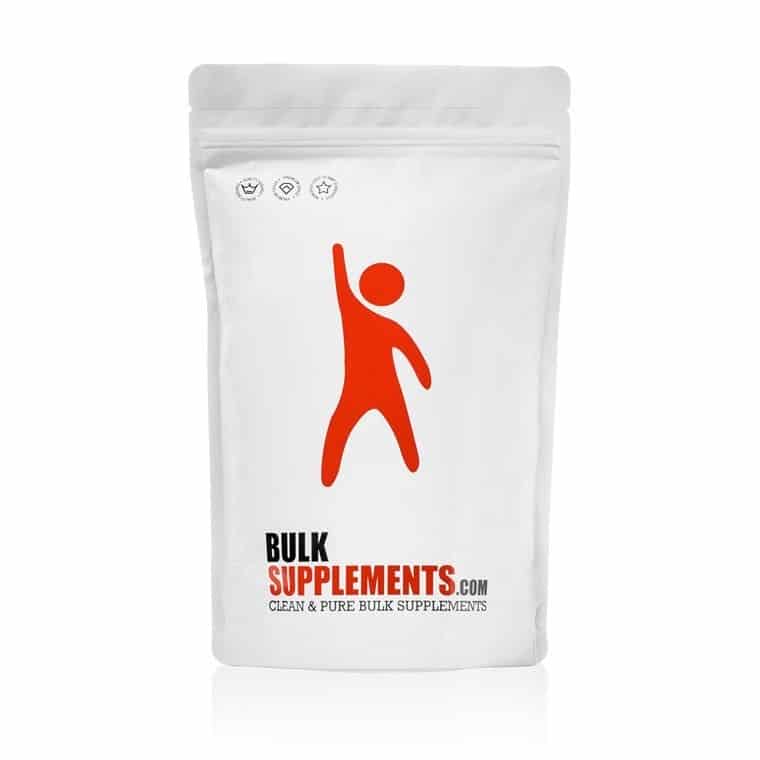
1. Creatine Monohydrate Powder by Bulk Supplements
Our Verdict: Best Overall
This creatine monohydrate powder by Bulk Supplements is created from 99.99% pure micronized creatine monohydrate.
It is lab tested for purity.
The product is also non-GMO and unflavoured.
Because it is micronized, it dissolves easily in liquids.
Pros:
- This powder is the best vegan creatine value for your money. The simple packaging, non-added flavors or scoops makes this a no fuss option.
- Another benefit is that it is micronized creatine. This means it will take you no time at all for it to dissolve in water or smoothies.
- The fact it has no additional flavors means it has a neutral taste that can be easily mixed into smoothies.
Cons:
- Due to the cheap cost of this product, the bag does not reseal too easily. You would want to place the creatine into a different container for better storage.
Read our full BulkSupplements Creatine Review here.
2. Now Sports Creatine Monohydrate

Our Verdict: Most Conscious
Now Foods has proudly created one of the best vegan creatine supplement that is free of preservatives and additives.
The Now Sports Creatine product is 100% natural, free of flavor and allows anyone to have access to its premium ingredient even on a tight budget.
They have a vegan symbol on the packaging, eliminating any uncertainty about the source of the creatine.
Pros:
- If you are looking for a creatine supplement whose parent company has a commitment to natural ingredients, then NOW is your best option.
- NOW is also budget friendly, giving you a lot of servings for a low price.
- They are also a proud partner with Terra Cycle. This allows them to close the loop on hard to recycle products such as toothpaste pouches tubes and food pouches. Overall showing their commitment to the environment.
Cons:
- Some reviewers have raised questions about where the creatine is sourced. If origin matters to you, contact the company.
- A few customers report digestive discomfort, which can happen with any creatine, especially at high doses.
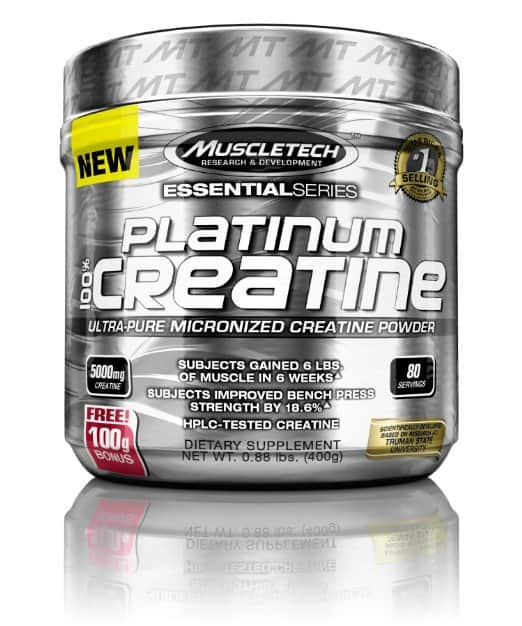
3. MuscleTech Platinum Creatine

Our Verdict: Most Clinically Studied
MuscleTech’s Platinum Creatine is HPLC-tested micronized creatine monohydrate without fillers, added sugars or flavours.
Each serving provides 5 grams of creatine monohydrate, the form studied most in sports nutrition. Creatine helps your muscles regenerate ATP, their quick energy source.
Pros:
- Creatine monohydrate is backed by many studies. Note that this research tested creatine in general, not this brand.
- Other studies show short-term benefits: in one, weight-trained men taking 2.5 grams a day for 10 days did more work in bench press sets, though their one-rep max didn’t change more than placebo.
- Creatine monohydrate is one creatine molecule bound to one water molecule, and it dissolves and digests easily.
Cons:
- If you have a sensitive stomach, you may experience some digestive discomfort when using this creatine.
- The creatine also comes in a giant tub which takes up a lot of space in your home, and only comes half full.
Read our full MuscleTech Platinum Creatine Review here.
4. No Bull Creatine Powder
Our Verdict: Best Customer Service
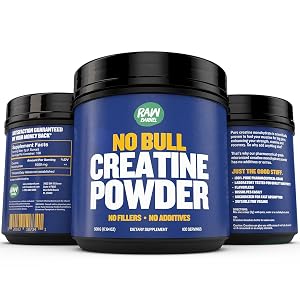
The No Bull creatine powder is micronized, so it mixes easily.
It is 100% pharmaceutical grade, lab tested and free from fillers or flavourings.
The tubs come in a convenient 100 day supply and the company provides a refund policy that allows anyone who is not satisfied with the product for a full refund - so you’ve got nothing to lose with No Bull...
Pros:
- If you are unsure about committing to a creatine supplement NO BULL creatine might have the best solution for you. The supplement comes in a 100-day tub and includes a lifetime warranty. If you are not satisfied, you can ship it back and get a full refund.
- The content of the No Bull tub is a smooth, micronized supplement which makes it easy for you to mix into a juice, water or smoothie.
- If you are relatively new to training, you would also benefit from their Free Digital Guide available with every purchase of the creatine tub.
Cons:
- Sometimes the powder dissolves better when using hot water, which is a little extra hassle in your morning routine.
- The creatine powder comes in a large tub, which is only filled half way. This has caused some people to complain about the unnecessary packaging waste.
5. Jarrow Formulas Creatine Monohydrate
Our Verdict: Best Mixability
Jarrow Formulas is manufactured in Germany and prides itself with a creatine monohydrate powder to enhance muscular performance for all its customers.
It is flavorless making it perfect for mixing it into your water, juice or smoothies.
The tub itself has a wide-mouth so it is easy to scoop out the required daily dose. This product comes with a scoop included eliminating any additional fuss about using the exact serving size.
Pros:
- If you are concerned about consuming genetically modified products, Jarrow Formulas creatine might be the best option for you.
- It is also easily mixed with water and other liquids.
Cons:
- This product can potentially cause some stomach upset, so if you are sensitive, consider trying an alternative.
- It comes in a big container, so if you do not like this product you are stuck with a large amount of it.
- Jarrow Formulas also offers a capsule form. HOWEVER, the capsule form probably isn't vegan (contains gelatin) and the capsules package doesn't specify "suitable for vegans" like the powder does. So stick with the powder.
Vegan & Vegetarian Creatine Buying Guide
So now that you know about the options for your creatine intake, let’s have a quick look at what these products do for your body.
Where is it Found?
Creatine is made mainly in your liver and kidneys from the amino acids arginine and glycine, then stored in your muscles. It helps produce energy during lifting and other high-intensity efforts.
You need about 1 to 3 grams a day to maintain your stores. Roughly half normally comes from meat and fish, and your body makes the rest.
Vegetarians and vegans have lower muscle creatine stores, so they may see bigger gains from supplementing.
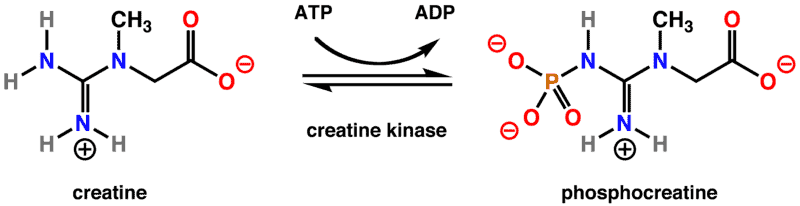
If you add some creatine supplement into your daily routine, you increase the stores of phosphocreatine. This is a stored version of creatine in your cells and helps produce high energy molecules called Adenosine Triphosphate (ATP).
ATP is the energy source your muscles use for short, intense bursts of exercise.
Source:Wikimedia
How Does Creatine Work?
Simply, additional creatine creates additional stores of phosphocreatine in your muscles, these can then be used to produce more ATP.
The effects of this include:
- Better Workload: Which allows you to increase your total work in a single training session.
- Increased Cell Hydration: Creatine draws water into muscle cells, and cell swelling is thought to signal an increase in protein building.
- Less Protein Breakdown: One short-term study found creatine reduced protein breakdown markers in men, though it didn’t increase muscle protein synthesis.
- Anaerobic Endurance: Creatine creates an energy buffer for your muscles in the form of phosphocreatine.
- Increased Strength: One scientific review of 22 studies found that creatine plus resistance training increased strength 8% more than training with a placebo (20% vs 12%).
SUMMARY
Taking creatine with resistance training helps your muscles do more high-intensity work, which leads to bigger gains in strength and lean mass over time.
Are All Creatine Plant-Based?
As a vegan, should you be taking creatine? Is there non-animal based creatine? Will it help improve your workouts? Does it impact vegans the same way as omnivores?
Omnivores get some creatine from meat and fish. A pound of uncooked beef or salmon contains only about 1 to 2 grams, so reaching a typical 3 to 5 gram supplement dose from food alone would take a lot of meat.
Vegans get essentially none from food, which is why many vegan lifters supplement. Vegan bodybuilder Brian Turner shares his view in the video below:
How Do You Check Your Creatine Is Vegan?
With creatine, the plain, unflavored powders are the easiest way to be sure you’re getting a vegan product.
Creatine itself in its pure form is vegan, however additives can potentially be from animals.
Capsules can throw off a consumer. While some individuals prefer to consume their creatine through capsule form, the material required to create this is generally animal based.
Most capsules are made from gelatin, which is a colorless and tasteless water-soluble protein. While an ideal substance to create capsules, unfortunately it is made from collagen which is the main structural protein found in skin and connective tissues in animals.
This means, even if the brand produces 100% vegan friendly creatine, the packaging could make the supplement non-vegan.
So look for the label to specify something along the lines of “vegetable sourced”, “vegetable cellulose,” or similar next to the capsule/gelatin ingredients listing to indicate the capsule is not an animal product.
SUMMARY
A good rule of thumb to follow is that any brand that produces a vegan product will proudly display this on their packaging. If you are unsure, contact the company to verify.
How Much Vegan Creatine Should You Consume?
The standard dosage is 3 to 5 grams per day. Some experts, including an American College of Sports Medicine roundtable, note that 3 grams a day raises muscle creatine as much as high doses, given enough time.
If you want faster results, you can start with a loading phase. This creates a rapid increase in your muscle’s stores of creatine.
For this phase, you should take 20 grams per day for 5-7 days. This can be split into four 5-gram servings throughout the day.
After this initial period, take 3 to 5 grams per day to maintain your stores. If you skip the loading phase, it takes about 4 weeks to fill your stores.
If you have kidney disease or take medications that affect your kidneys, talk to your doctor before using creatine.
SUMMARY
A daily dose of 3 to 5 grams works for most people. The most common side effect is a little weight gain from water stored in your muscles.
Summary
Many creatine supplements on the market are vegan, each with its own pros and cons.
And to conclude this review, our #1 choice is Bulk Supplements’ Creatine Monohydrate Powder. The high purity, micronized product comes at a low price point and you just can’t go wrong with it.
Creatine raises the energy stores in your muscles and, combined with training, helps build strength.
Many clinical studies support its safety in healthy people. Research on brain benefits is still emerging.
While creatine is typically found in animal products such as steak, the best vegan creatine supplements reviewed above provide a great non-animal based alternative.
Sources
- International Society of Sports Nutrition position stand: safety and efficacy of creatine supplementation in exercise, sport, and medicine, Journal of the International Society of Sports Nutrition (PMC)
- Effects of creatine supplementation and resistance training on muscle strength and weightlifting performance, Journal of Strength and Conditioning Research (PubMed)
- The physiological and health effects of oral creatine supplementation, American College of Sports Medicine roundtable, Medicine & Science in Sports & Exercise (PubMed)