4 Gauge Pre-Workout Review
Contents
- General Info - 4 Gauge
- 4 Gauge Overview
- Main Features
- Nutritional Profile & Ingredients
- Benefits & Effectiveness
- L-Citrulline Dl-Malate (6000mg)
- Caffeine Anhydrous (150mg)
- L-Theanine (200mg)
- Rhodiola Rosea (100mg)
- Creatine Monohydrate (1000mg)
- Red Beet Root Extract (300mg)
- Coconut Water Powder (300mg)
- Flavour, Mixability and Consistency
- 4 Gauge Side Effects
- Price and Buying Options
- Alternatives
- Cellucor C4
- Pre JYM
- Beyond Raw LIT Pre-Workout
- 4 Gauge Pros and Cons
- Pros:
- Cons:
- Should You Get 4 Gauge?
- Sources
4 Gauge is a stimulant pre-workout built around citrulline malate, a moderate dose of caffeine and L-theanine.
If you want a pre-workout that is lighter on caffeine than many big brands, it is worth a look.
The formula leans on focus ingredients as much as pump ingredients.
In this 4 Gauge review, we'll look at what's in it and how the doses compare with the research.
General Info - 4 Gauge
4 Gauge is made by Roar Ambition, which markets its products around natural ingredients and fully disclosed labels.
As well as the 4 Gauge pre-workout, the brand sells other supplements, including fat burners and testosterone boosters. Those claims are not covered here.
The brand says its formulas use clinically studied ingredients. That means the ingredients have been researched, not that 4 Gauge itself has been tested in clinical trials.
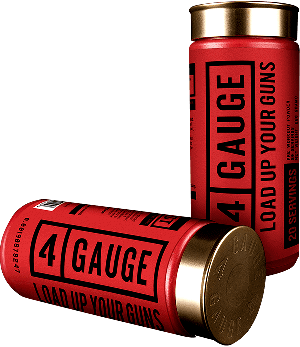
The tub is shaped like a shotgun shell, which is where the name comes from.
4 Gauge Overview
This pre-workout combines ingredients aimed at blood flow, focus and endurance in one scoop.
Compared with high-stimulant products such as Pre JYM, 4 Gauge has less caffeine. It pairs that caffeine with L-theanine, which may smooth out the jittery feeling some people get.
4 Gauge is marketed to help with strength, endurance and focus. Caffeine and citrulline have the best research behind them. Training, sleep and diet will still do far more for your results than any pre-workout.
For many lifters, focus and motivation are a big part of a good session. That is the gap 4 Gauge tries to fill.
Main Features
- Moderate caffeine dose (150mg)
- Citrulline malate for blood flow
- L-theanine paired with caffeine for focus
- Fully disclosed label, no proprietary blends
- Naturally sweetened
Nutritional Profile & Ingredients
There are a number of key ingredients that we will look at in more detail in this 4 Gauge review.
The headline ingredients are L-Citrulline DL-Malate (6000mg), Caffeine (150mg), L-theanine (200mg), rhodiola rosea (100mg) and red beet (300mg).
The label lists every ingredient and dose, so you know exactly what you are getting.
At 150mg of caffeine, one serving has about as much as a 12-ounce cup of brewed coffee. Many pre-workouts contain 200-300mg or more.

If you are sensitive to caffeine, a 150mg dose is easier to handle than most stimulant pre-workouts. Combining caffeine with L-theanine is also a common pairing for focus.
Red beet, or beta vulgaris, is less common in pre-workouts. Beets are a source of dietary nitrate, which the body converts to nitric oxide.
Nitrate from beetroot juice has been studied for endurance, but the studied amounts are far larger than what 300mg of beet extract is likely to supply.
All the ingredients, as listed on the label, can be found below:
- Potassium (10mg)
- Sodium (20mg)
- Calcium (30mg)
- L-Citrulline Dl-Malate (6000mg)
- Creatine Monohydrate (1000mg)
- Acetyl L-Carnitine (500mg)
- Red Beet Root Extract (300mg)
- Coconut Water Powder (300mg)
- L-Theanine (200mg)
- Caffeine Anhydrous (150mg)
- Rhodiola Rosea Powder (100mg)
Benefits & Effectiveness
Here's what each main ingredient does and how its dose compares with research.
L-Citrulline Dl-Malate (6000mg)
Citrulline is a non-essential amino acid the body converts to arginine, which is used to make nitric oxide. L-Citrulline Dl-Malate may support blood flow during training.
Research on citrulline malate and strength performance is mixed. Some studies found a few extra reps, while others found no effect.
At 6000mg, the dose is higher than many pre-workouts provide.
Caffeine Anhydrous (150mg)
Caffeine anhydrous is simply dehydrated caffeine powder. It is the same molecule as the caffeine in coffee, so it is not "stronger" or gentler per milligram.
Caffeine is one of the best-supported performance aids. The International Society of Sports Nutrition reports benefits at 3-6 mg per kg of body weight, usually taken about 60 minutes before exercise.
For a 180-pound (82kg) adult, that is roughly 245-490mg. So 150mg is a mild dose for most people, which suits those who are sensitive to stimulants.
But then since we're talking about caffeine, it all depends how much or how less you'd like to consume. That said, I've got Jekyll & Hyde here to check which one is just right for you based on its caffeine potency.
L-Theanine (200mg)
L-theanine is an amino acid found mainly in tea leaves. It is often paired with caffeine for focus.
Some people find it takes the edge off caffeine.

The research on this pairing is limited and mostly short term. Treat it as a possible bonus, not a proven effect.
Rhodiola Rosea (100mg)
Rhodiola Rosea is an herb used in traditional medicine in Europe and Asia. It is promoted for fatigue, mood and athletic performance.
The evidence is weak. The National Center for Complementary and Integrative Health says there isn't enough reliable evidence to know whether rhodiola is useful for any health purpose.
It is considered possibly safe for up to 12 weeks. Reported side effects include dizziness, headache and insomnia.
Creatine Monohydrate (1000mg)
Creatine Monohydrate is one of the best-researched supplements for strength and muscle gain.
The catch is the dose. The ISSN recommends 3-5g a day for maintenance, so 1g per serving is well below the effective amount.
If you want creatine's benefits, take a separate 3-5g dose daily. Don't try to get there by stacking extra scoops of a pre-workout, since that also stacks the caffeine.
And if you're into gaining muscle mass, I'd recommend you check this pre-workout article review we have compiled for more info and resources.
Red Beet Root Extract (300mg)
Red Beet Root Extract adds dietary nitrate, which the body can convert to nitric oxide.
Beetroot juice studies use much larger amounts of nitrate. At 300mg of extract, don't expect a noticeable effect on its own.
Combined with citrulline, it rounds out the blood-flow side of the formula.
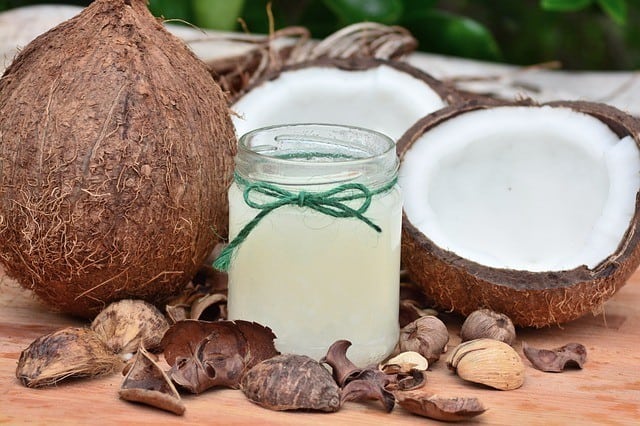
Coconut Water Powder (300mg)
Plain coconut water contains electrolytes, mainly potassium.
By the way, let me mention here that coconut water is also good for cleansing and it is a good thing to practice that once in a while.
At 300mg of powder, it adds only small amounts of electrolytes. Plain water is still your main source of hydration during training.
Flavour, Mixability and Consistency
If you find most pre-workouts too sweet, this one is milder and doesn't leave a strong aftertaste.
4 Gauge comes in fewer flavors than most big brands. It uses natural flavors and monk fruit extract for sweetness, and has about 5 calories per serving.
The main flavor is Fruit Blast, so there are no dessert-style options.
It mixes well with 300-350ml of water or juice per serving. It doesn't leave grainy powder at the bottom.
Stick to the serving on the label. Doubling up doubles the caffeine and citrulline too, which raises the odds of jitters, a racing heart and stomach upset.
4 Gauge Side Effects
Natural ingredients can still cause side effects. Caffeine is the main one to watch, along with any ingredient you are sensitive or allergic to.
As all the ingredients are stated on the label, and in this review, you can easily check them before buying.
With 150mg of caffeine plus L-theanine, jitters and headaches are less likely than with high-stimulant products. Count all your caffeine sources, though. The FDA says healthy adults can usually have up to 400mg of caffeine a day.
If the formula you buy contains sugar alcohols such as xylitol or erythritol, large amounts can cause side effects such as bloating and diarrhea.
Skip it if you are pregnant, under 18, or have a heart condition or high blood pressure, unless your doctor says otherwise.
SUMMARY
4 Gauge is a moderate-stimulant formula with a transparent label. Take one serving as directed and keep your total daily caffeine in check.
Price and Buying Options
4 Gauge is sold through the official 4 Gauge website here. Buying direct from the brand helps you avoid counterfeit or old stock from third-party sellers.
Check the site for its current return policy and payment options.
When we last checked, the best deal was three 20-serving containers for $135 USD with a fourth free. That worked out to about $1.69 USD per serving.
One or two containers cost $45 USD each, about $2.25 USD per serving. Prices change, so check the current offer.
4 Gauge costs more per serving than many mainstream pre-workouts.
Alternatives
If the price puts you off, there are other options out there for the best pre-workout supplement. Here are a few to compare.
Cellucor C4
C4 is one of the cheapest and most widely sold pre-workouts. Price per serving is usually around $1 USD, but it varies by size and seller.
Some older C4 formulas used proprietary blends, which hide individual doses. Check the current label before you compare it with 4 Gauge.
Pre JYM
We compared 4 Gauge to Pre JYM earlier in this review, mainly to show the difference in caffeine content.
Pre JYM also uses a fully disclosed label, with much more caffeine.
It contains 300mg of caffeine per serving, roughly two 12-ounce cups of brewed coffee. That is a large single dose, so it is a poor fit for anyone sensitive to stimulants.
Price per serving has been in a similar range to 4 Gauge.
Beyond Raw LIT Pre-Workout
Beyond Raw LIT is another fully disclosed formula that usually costs a little less per serving than 4 Gauge.
It contains more caffeine than 4 Gauge, so check the label if you are sensitive to stimulants.
It uses sucralose for sweetness and comes in more flavors. If you want natural sweeteners only, 4 Gauge is the closer fit.
4 Gauge Pros and Cons
Pros:
- Moderate caffeine dose
- Fully disclosed label
- Citrulline malate at a research-level dose
- Naturally sweetened
Cons:
- Only available on manufacturer website
- Expensive
- Few flavor options
- Creatine and beet doses are too low to matter much
Should You Get 4 Gauge?
In this 4 Gauge pre-workout review, we found a transparent, moderate-stimulant formula. Its strongest ingredients are citrulline malate and caffeine. Several others are underdosed or have weak evidence.
Compared to other products on the market, 4 Gauge has a cleaner label but a higher price, even with the bundle deal.
If you want a lower-caffeine pre-workout with a transparent label and don't mind the price, it is a reasonable choice.
Check out 4 Gauge for yourself if it fits your needs and budget.
Sources
- International society of sports nutrition position stand: caffeine and exercise performance, Journal of the International Society of Sports Nutrition
- International Society of Sports Nutrition position stand: safety and efficacy of creatine supplementation in exercise, sport, and medicine, Journal of the International Society of Sports Nutrition
- Rhodiola: Usefulness and Safety, NCCIH
- Spilling the Beans: How Much Caffeine is Too Much?, FDA